boss audio triple 12 inch subwoofer bandpass
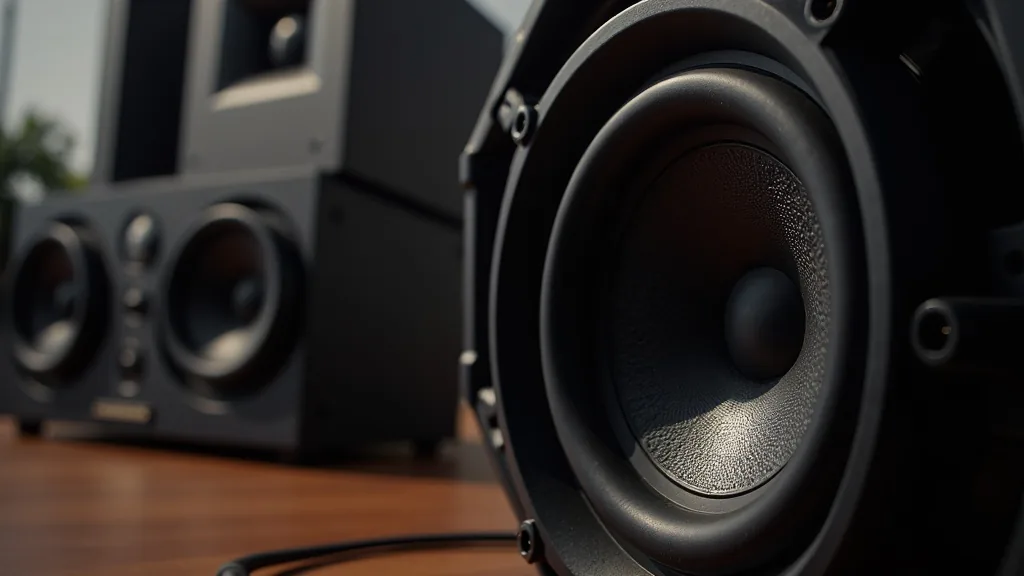
The Boss Audio triple 12 inch subwoofer bandpass system is the BASS1400. It houses three 12-inch woofers in a factory-built MDF dual-chamber bandpass enclosure, rated at 400 watts RMS and 1,400 watts peak. If you're searching this term, you want three things answered fast: does it actually hit hard, what amp does it need, and will it fit your vehicle. This page gives you specific numbers, honest trade-offs, and a complete setup guide so you don't waste money on mismatched components.
The short answer on bass output: yes, it hits hard within a focused band centered around 55 to 75 Hz. It's built for hip-hop, trap, and EDM. It won't reach cleanly below 40 Hz. Know that going in, and this system delivers exactly what it promises at its price point.
Boss Audio BASS1400 specs: what the published numbers actually mean
Boss publishes two power figures. Most buyers misread them, pair the wrong amplifier, and end up with weak or damaged subs. Here's what each number actually tells you.
- Peak power: 1,400 watts. A momentary burst figure used in marketing. Never size an amplifier to this number.
- RMS power: 400 watts. The real, sustained power the system handles continuously. Your amplifier's RMS output must match this at 4 ohms.
- Impedance: 4 ohms. The three subs wire internally to a combined 4-ohm load. Verify your amp is stable at 4 ohms before purchasing.
- Enclosure type: dual-chamber bandpass. MDF construction with carpet wrap. The port is factory-tuned and can't be retuned without cutting the box.
- Dimensions: approximately 36 inches wide, 14 inches tall, 13 inches deep. This won't fit a compact sedan without losing trunk access entirely. Measure your trunk before ordering.
- Frequency range: approximately 40 Hz to 80 Hz. Output rolls off sharply outside this band by design, not by defect.
The 36-inch width catches most buyers off guard. A mid-size sedan like a Honda Accord or Toyota Camry accommodates it without major sacrifice. A Honda Civic or Mazda3 likely does not without folding a rear seat.
Measure your trunk's interior width at its widest point, not just at the lip opening. Those two measurements often differ by 4 to 6 inches. Check both before you order.
How the dual-chamber bandpass design shapes bass from three 12 inch woofers
A bandpass enclosure works differently from every other box type. The three woofers sit between an inner sealed chamber and an outer ported chamber. Sound exits only through the port, which acts as a physical frequency filter. Nothing below roughly 38 Hz and nothing above roughly 82 Hz passes through at meaningful volume.
That filter makes bandpass enclosures efficient and loud within a narrow band. At the tuned frequency, a bandpass box can be 3 to 6 dB louder than a sealed box using identical woofers and identical amp power. That's roughly double the perceived loudness at the same wattage, which explains why a budget system like the BASS1400 can sound genuinely impressive for its price.
The trade-off is accuracy and low-end extension. You get a strong, punchy thump rather than deep, articulate sub-bass. Kick drums in hip-hop and trap sit right in the 50 to 70 Hz range where this box excels. Bass guitar fundamentals below 40 Hz and orchestral low-end will sound thin. Genre matching matters more with a bandpass system than with any other enclosure type.
Bandpass vs sealed vs ported: where the BASS1400 fits
Sealed boxes give tight, accurate bass with good transient response but need more power to get loud. Ported boxes extend low-end reach and add efficiency but require careful tuning to avoid port noise. Bandpass boxes trade low-end extension and transient accuracy for peak loudness in the midrange bass frequencies.
For maximum thump on a budget without custom fabrication, bandpass wins. For accuracy across genres, it doesn't. That's the honest reality of the design choice Boss made here.
What amplifier a triple 12 inch bandpass subwoofer system actually needs
This is where most installs go wrong. You need a mono Class D amplifier rated at 400 to 500 watts RMS into a 4-ohm load. Running below 300 watts RMS makes three 12-inch woofers sound anemic. Running above 550 watts RMS continuously risks burning the voice coils.
Set your amp's low-pass crossover between 60 Hz and 80 Hz. This aligns with the box's natural upper roll-off and keeps output tight. If your amp has a subsonic filter, engage it at 30 to 35 Hz. That blocks ultra-low frequencies the bandpass enclosure physically can't reproduce, protecting the woofers from over-excursion at high volume.
Gain setting: the mistake that kills voice coils fastest
Don't treat the gain knob as a volume control. Gain matches your amp's input sensitivity to your head unit's output signal, typically 2 to 4 volts. Maxing the gain with a strong head unit signal causes clipping. Clipping distortion destroys voice coils faster than clean overpowering ever will.
Start at 40% of the gain range. Play a bass-heavy track at 80% of your head unit's maximum volume. Increase gain slowly until you hear distortion or harshness, then back off slightly. That's your ceiling. Hold it there.
Installation steps that prevent the 4 most common BASS1400 failures
Three 12-inch subs at 400 watts need a correct install to perform. Cut corners here and the bass sounds weak, distorted, or noisy regardless of what you paid for the hardware.
- Use 4-gauge power wire minimum. At 12 volts, 400 watts draws roughly 35 to 40 amps sustained. Undersized wire causes voltage drop, which thins bass output and stresses the amplifier's output stage.
- Install a 60-amp inline fuse within 18 inches of the battery terminal. A shorted power cable without a fuse can start a fire. This step isn't optional.
- Ground the amp to bare metal. Sand paint off the grounding point down to shiny metal before bolting. A high-resistance ground causes alternator whine, distortion, and thermal shutdowns. It's the root cause of roughly half of all reported amplifier failures in budget installs.
- Orient the port opening toward the passenger cabin. The bandpass enclosure projects sound through the