how do you become an audio book reader
To become an audiobook reader, you need four things: a trained voice, a quiet home studio, a condenser microphone, and a finished demo reel. Most narrators land their first paid title within 6 to 12 months of focused preparation. A good voice alone won't get you there — what gets you hired is control, consistency, and clean audio that meets published technical standards from day one.
The audiobook industry produced over 74,000 new titles in 2023. Publishers and indie authors need narrators constantly. That demand creates real opportunity for beginners who prepare correctly and understand exactly what rights holders expect before they submit a single audition.
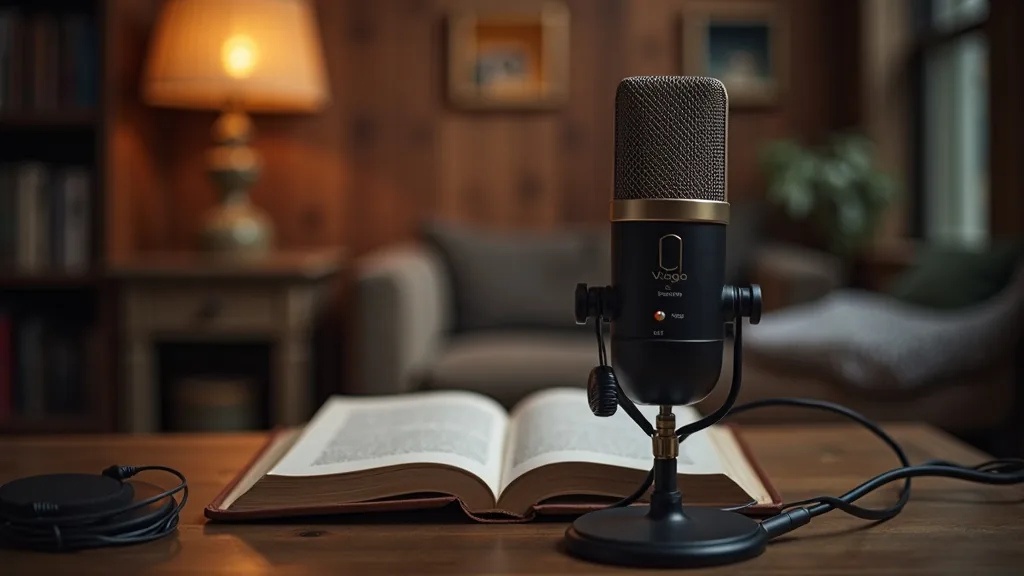
What audiobook narrators actually do and what publishers expect
An audiobook narrator doesn't just read words aloud. You interpret tone, shift between character voices, sustain consistent energy across 8 to 15 hours of finished audio, and deliver that same quality session after session without drift in pacing or pitch.
Publishers measure quality by three things: clean audio, consistent room tone, and a natural storytelling performance. Audible's ACX platform sets the technical bar precisely. Your audio must hit -23 LUFS RMS loudness, stay below -3 dBFS peak, and keep a noise floor below -60 dBFS. Those are the specific numbers you're working toward from your very first recording session.
Most narrators specialize by genre. Romance, business nonfiction, self-help, and true crime each demand a distinct delivery style. Picking a genre focus early sharpens your demo and makes it easier for rights holders to picture your voice on a specific title.
The difference between voice acting and audiobook narration
Commercial voice-over work rewards short, punchy takes. Audiobook narration rewards endurance and subtlety. You might record for 4 hours to produce 2 hours of finished audio, staying vocally consistent throughout. That stamina is a skill you build deliberately, not something you walk in with.
Character differentiation matters, but restraint matters more. A narrator who performs every character at full theatrical volume exhausts listeners. The goal is distinct voices that feel natural rather than theatrical voices that call attention to themselves.
Voice training and narration skills you need before your first audition
A pleasant voice is a starting point, not a qualification. What actually gets you hired is control: breath support, clear articulation, measured pacing, and the ability to voice multiple characters without losing consistency over hours of recording.
4 specific practice methods that build real narration skill
- Read aloud for 30 minutes every day. Use physical books, not screens. This builds vocal stamina and reveals exactly where your breath runs short mid-sentence.
- Record and review every session. Most beginners resist listening back to themselves. Do it anyway. You'll identify 3 to 5 recurring problems within two weeks of consistent review.
- Work with a dialect coach for accents in your target genre. A poorly executed accent pulls listeners out of the story faster than almost any other mistake you can make.
- Take a narration course taught by a working narrator. Look for instructors with credits on ACX, Findaway, or Spotify for Authors. They cover technical delivery specifics that standard acting classes skip entirely.
You don't need a theatre degree. Plenty of successful narrators came from radio, podcasting, or corporate voice-over work. What matters is demonstrable control, not a credential on a wall.
How long it actually takes to get audition-ready
Expect 3 to 6 months of daily practice before your recordings sound professional enough to submit. Narrators who rush this stage spend more time getting rejected than those who take an extra month on preparation.
A useful milestone: record a 15-minute sample from a public domain novel and share it with an audiobook narration community for honest feedback. If the primary comments focus on performance rather than audio quality, your technical setup is working. That's when you're close to ready.
Warming up your voice before every session
Dry vocals and tight jaw muscles show up in recordings as clipped consonants and thin tone. Spend 10 minutes before each session on lip trills, humming, and tongue twisters at slow speed. Drink room-temperature water, not cold. Cold water tightens vocal cords and adds crackling to your recordings that no plugin fully fixes in post.
Home studio setup for audiobook recording on a realistic budget
You don't need to rent studio time to start. Most working audiobook narrators record at home. Your room matters more than your microphone, and that's where most beginners get the priority backwards.
The right microphone for audiobook narration
A large-diaphragm condenser microphone is the industry standard. The Audio-Technica AT2020 and the Rode NT1 both meet ACX technical specs and cost under $200. Don't spend $500 on a mic before you're earning from narration consistently. The room will limit you long before the microphone does.
Use a cardioid polar pattern. It rejects sound from behind the capsule, which reduces room noise pickup significantly in untreated spaces. Position the mic 6 to 8 inches from your mouth, slightly off-axis to reduce plosive pops on "p" and "b" sounds.
Acoustic treatment that actually works
Hard walls create flutter echo that shows up as a "room ring" in your recordings. Line your recording space with absorption panels, heavy curtains, or bookshelves packed tightly with books. A walk-in closet filled with hanging clothes is a free starting solution that passes ACX noise floor requirements for many narrators who are just beginning.
Before you record anything for submission, run this test: capture 10 seconds of silence in your space and check the noise floor in Audacity. If it reads louder than -60 dBFS, fix the room before you record another word.
Audio interface and headphones
A USB audio interface like the Focusrite Scarlett Solo (around $120) converts your microphone's analog signal cleanly into your computer. Pair it with closed-back headphones for monitoring while you record. Open-back headphones bleed sound into the microphone and contaminate your audio.
Recording and editing software
Audacity is free and handles everything a new narrator needs: recording, noise reduction, normalizing loudness, and exporting to ACX-required formats. Adobe Audition and Reaper are paid options with faster workflows once you're processing multiple titles per month. Start free, upgrade when the tool genuinely slows you down.
The ACX Check plugin: use it before every submission
ACX offers a free Audacity plugin called ACX Check. It measures your file against all three technical requirements simultaneously. Run it on every exported file before you submit. Many rejections come not from bad performance but from audio that misses loudness specs by 1 or 2 LUFS. This plugin catches that in 5 seconds.